
TL;DR
- See every step: Agent Activity traces each agent session’s prompts, MCP and tool calls, read/write access, and sensitive data touches.
- Control what’s allowed: Custom guardrails by model, MCP server, and skill let you flag or block, starting from 100+ built-in policies.
- Endpoint to production: It’s now in early access across OX.VibeSec and OX.Cloud, with a new LiteLLM connector.
For the past year, the first question security teams asked about AI was simple: do we have agents running, and where? That question now has an answer. The harder one is what comes next: what are those agents actually doing?
Today we’re introducing Agent Activity, now in early access as part of OX.VibeSec and OX.Cloud. It gives security teams step-by-step visibility into how their AI agents behave at runtime, and the controls to decide what those agents are allowed to do.
Agents move faster than static scans
AI agents don’t sit still long enough to be secured by a scan. They call MCP servers, invoke tools, read and write to business systems, and touch sensitive data, often in seconds and often without a human in the loop.
Discovery tells you an agent exists. Code scanning tells you how it was built. Runtime anomaly detection tells you something unusual happened. None of them tells you, step by step, what an agent did with the access it was given. That’s the gap Agent Activity closes.
Every step, not just the outcome
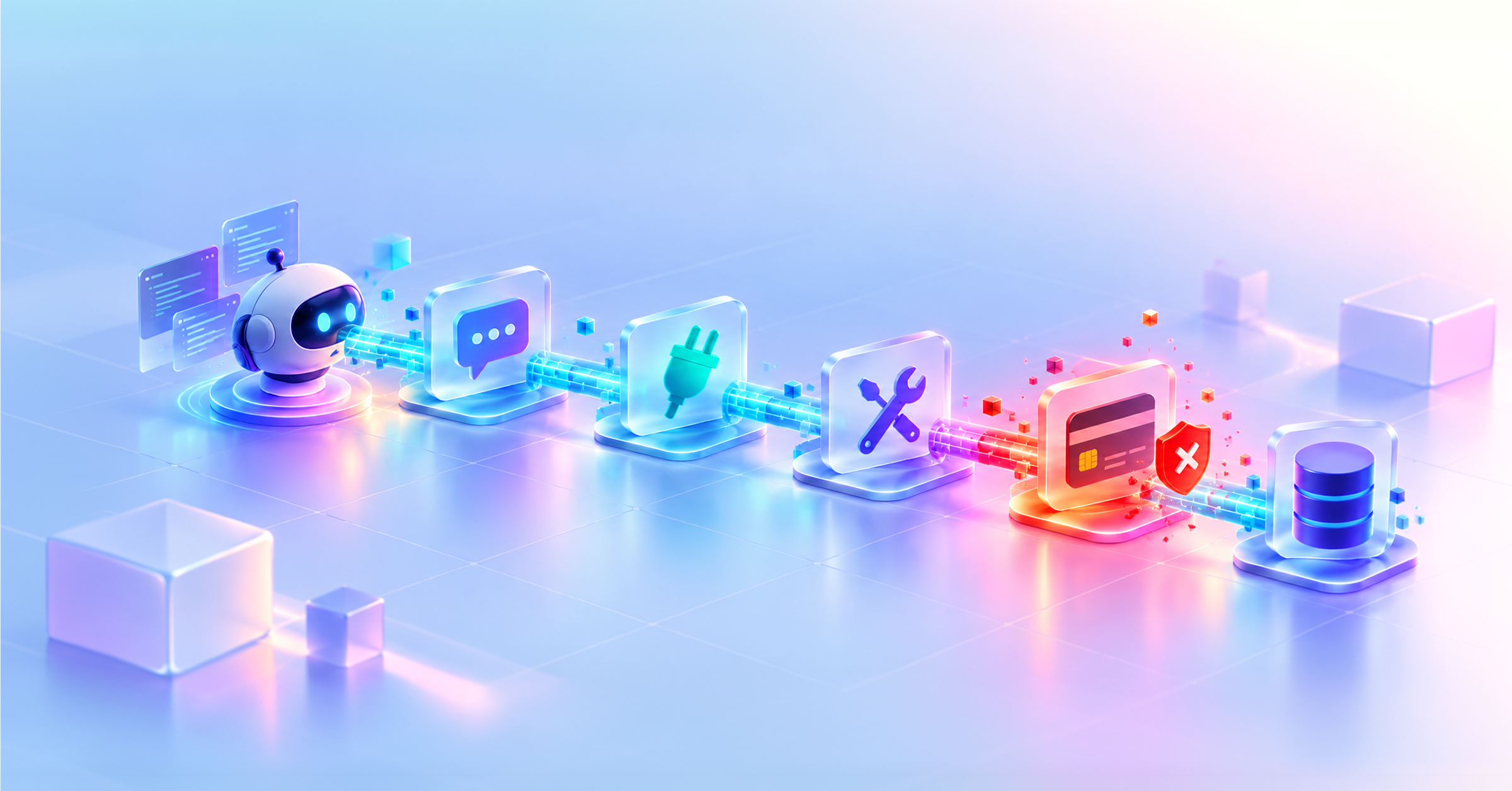
Agent Activity opens up what has been a black box. For each agent session, security teams can trace the full chain of actions from start to finish:
- Prompts and responses: what the agent was asked, the instructions it worked from, and what came back.
- MCP interactions and tool usage: which MCP servers and tools the agent called, and in what order.
- Access permissions: whether the agent was reading or writing, so you can tell the difference between an agent that views a ticket and one that modifies it, or one that reads Slack and one that posts to it.
- Sensitive data awareness: when an agent interacts with PII, secrets, tokens, or financial data, and when that data is at risk of leaving where it belongs.
In many cases, that visibility is enough to answer the question any security engineer or leader is being asked. When it isn’t, for example when an agent that leaked an API key also touched financial records, you need to act on it.
From visibility to control
No two organizations secure AI the same way. Some agents are meant to run freely; others should never come near production data. Agent Activity lets each team define what “allowed” means for its own environment.
- Customizable runtime guardrails: build policies around the AI models in use, the MCP servers agents can reach, and the skills they can combine. For example, you can stop a specific model from using a set of MCP servers alongside a skill that touches sensitive internal data.
- Flag or block, your call: decide whether a violation is surfaced for review or stopped outright, and set the severity that fits your risk tolerance.
- 100+ built-in guardrails: start with more than 100 out-of-the-box security policies, with more on the way.
The result is AI governance that runs at the speed of the agents themselves, not on the cadence of a periodic scan.
From the endpoint to production
A misbehaving agent is a problem wherever it runs. Think of it like a fire alarm: the room matters (an agent near your crown jewels or in production is more urgent than one on a test box), but you want the alarm in every room.
That’s why Agent Activity is available across both OX.VibeSec and OX.Cloud, giving teams one view of agent behavior from developer endpoints through to production workloads.
We’ve also added a new LiteLLM connector. LLM proxies have become a baseline part of how organizations run AI, and this integration brings that traffic into the same picture.
Why this matters
AI security isn’t only about discovering agents or scanning the code behind them. It’s about understanding and controlling what they do while they’re running.
Agent Activity is a significant step toward unified AI visibility, detection, and runtime governance across the entire agent lifecycle, so security teams can say yes to AI adoption with confidence instead of guesswork.
Availability
Agent Activity is available today in early access for OX customers, and the experience will continue to evolve on the way to general availability.