Summary
Consolidated AppSec tools via OX; eliminated manual triage and tool sprawl.
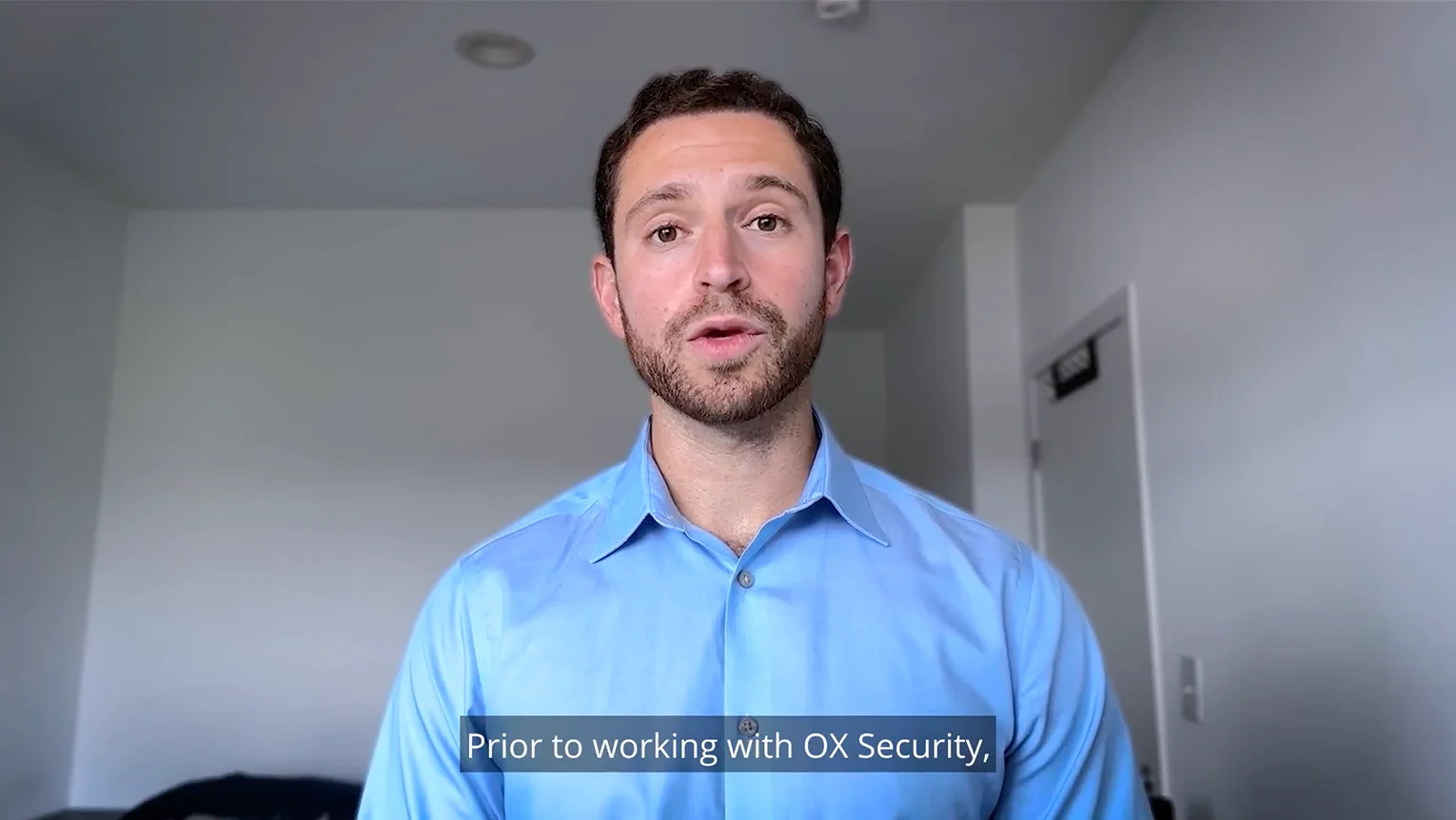
DoubleVerify, a leading software platform for digital media measurement and analytics, found that their fragmented security tools were creating manual bottlenecks and increasing the risk of missing critical threats. To streamline their operations and keep pace with modern software delivery, DoubleVerify moved away from disconnected scanners and deployed OX AINAPP. By adopting a code-to-runtime approach and a unified control plane, DoubleVerify consolidated their vulnerability data, automated risk prioritization, and empowered non-security teams to proactively monitor and resolve issues. As Seth Kirschner, Application Security Manager at DoubleVerify, notes:
“OX Security has been instrumental in simplifying our security processes. It allows us to get a clear, prioritized view of our applications without manual work, which has been a huge time-saver”.
The Catalyst
Fragmented Tools and Manual Bottlenecks
Before partnering with OX Security, DoubleVerify’s application security posture was hindered by siloed, fragmented tools. Seth Kirschner explains the core difficulty:
“We had multiple scanners that weren’t integrated. Each one had its own view, which led to inefficiencies and an increased chance of missing vulnerabilities critical to our applications”.
This fragmentation forced the security team to rely on manual effort just to track vulnerabilities across different systems, leading to severe operational inefficiencies. As engineering teams move toward AI-native development (VibeCoding) to accelerate software creation, the lack of centralized visibility creates dangerous blind spots.
The Strategy
Unifying AppSec with AI-Native Security Engineering
DoubleVerify selected OX Security for its unique application-first approach to security. Rather than focusing solely on infrastructure or cloud issues, the organization utilized OX to consolidate, normalize, and correlate security data into a single, accessible platform. As Seth Kirschner explains:
“OX Security’s platform provided a single, aggregated view that reduced the need to manually compile information from various tools. This application-centric approach allowed us to focus our efforts where they were needed most”.
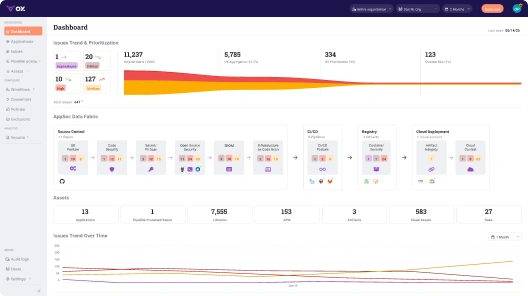
By operating through a unified control plane, DoubleVerify established a comprehensive PBOM (Pipeline Bill of Materials), gaining centralized visibility over their entire software supply chain.
The Transformation
Context That Predicts Risk Before Runtime
The defining shift for DoubleVerify was moving from manual vulnerability tracking to automated, risk-based prioritization. The OX platform utilizes deep context that predicts risk before runtime, allowing the system to automatically filter out noise and surface the most critical threats. Seth Kirschner highlights the impact of this new workflow:
“OX Security’s platform gave us a clear, prioritized view of our applications without manual work, saving significant time”.
Crucially, the platform’s intuitive design improved accessibility, enabling non-security teams, such as developers and DevOps engineers, to monitor vulnerabilities in real-time. Security was no longer a siloed function but a shared, continuous process where results are prioritized by actual reachability and impact.
The Results
Accelerated Remediation and Reduced Overhead
By replacing fragmented legacy tools with a unified platform, DoubleVerify achieved significant, rapid improvements to their security posture:
- Unified Security Management: DoubleVerify successfully consolidated their security data across multiple tools into one centralized, application-focused solution.
- Accelerated Remediation: The platform’s risk-based prioritization eliminated manual triage, allowing engineering teams to fix critical issues faster and more efficiently.
- Strengthened Defense: Ultimately, DoubleVerify streamlined their entire security process, significantly reduced operational overhead, and strengthened their defense against evolving, complex threats.
Key Takeaways
Strategic Lessons for Security Leaders
- Fragmented Tools Create Risk: Relying on disconnected scanners requires heavy manual effort, increasing the likelihood that critical vulnerabilities will be missed.
- Context Accelerates Remediation: A unified platform that uses environment-aware context to prioritize risks saves significant time and allows teams to focus on actual threats rather than manual triage.
- Security Must Be Accessible: True code-to-runtime security requires empowering developers. When non-security teams can easily monitor vulnerabilities, organizations can achieve true prevention at creation