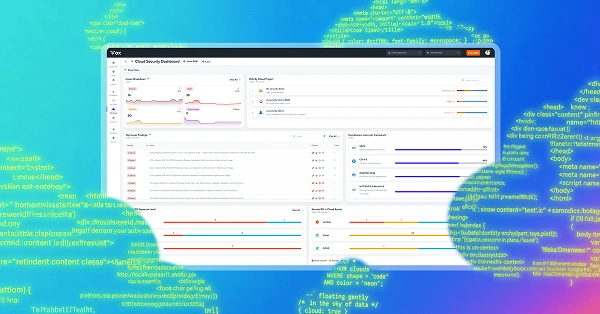

TL;DR
- Source-code context ties a cloud finding to the repository, file, commit, and team behind it, so the fix lands where the problem originated.
- A cloud finding names a symptom; the repository, file, and commit behind it name the cause – which is why permanently closing a runtime alert means changing source code, not console state.
- Traditional Cloud Native Application Protection Platforms (CNAPPs) identify cloud vulnerabilities but lack the source-code context developers need to fix root causes.
- Modifying resources via cloud consoles causes configuration drift because permanent fixes require committing code to IaC templates.
- Routing un-attributed cloud alerts to a single DevOps queue creates bottlenecks that automated code attribution solves.
- Prioritizing risks by severity alone wastes time on non-exploitable bugs unless paired with reachability analysis.
- Mapping runtime findings back to source code feeds pre-production pipelines to block recurring misconfigurations before deployment.
Why Do Cloud Findings Need Source-Code Context?
Cloud findings need source-code context because the alert only marks the symptom in production, while the fix lives in the code that produced it – the repository, file, and commit behind the finding – so nothing short of a code change closes it for good.
Imagine a scenario. Your Cloud Native Application Protection Platform (CNAPP) reports a public S3 bucket holding customer data. Someone locks it down in the console, the alert clears, and the ticket closes. Three days later, though, a routine deployment reopens it – because the Terraform module that created the bucket still declares it “public-read,” and nobody changed the Terraform. The alert happened in the cloud; the cause was in a code repository dependency. Source-code context tells you which repository, which file, and whose code and commits.
Modern cloud security tools are unmatched at pinpointing infrastructure vulnerabilities in real time. However, when a runtime alert lacks direct visibility into the codebase that created it, security teams are left playing a perpetual game of triage tag. Connecting runtime cloud findings directly to source-code context transforms reactive cloud alerts into permanent, developer-driven fixes at the root cause.
The Challenge: Cloud Alerts Without a Line of Code Attached
Modern CNAPPs are exceptional at answering a specific set of operational questions: Which S3 bucket is exposed to the public internet? Which running container exhibits a critical CVE? Which identity holds excessive IAM privileges across our AWS environment?
By unifying Cloud Security Posture Management (CSPM), Cloud Workload Protection Platforms (CWPP), and Cloud Infrastructure Entitlement Management (CIEM), CNAPPs successfully draw graph-based attack paths across your runtime environment. Yet, for all their contextual power at the infrastructure layer, CNAPPs hit a hard ceiling at the cloud boundary. They tell you what is broken in production, but they cannot tell you who wrote it, where it lives in source control, or how to prevent it from redeploying on the next CI/CD run.
This guide is designed for AppSec and CloudSec leaders to understand why runtime-only CNAPP alerts fail to resolve security debt and how enriching cloud findings with source-code context enables root-cause remediation.
The Triage Trap: Detection vs. Attribution
This disconnect creates a high-friction operational bottleneck. Security teams are not struggling to detect cloud risks; they are drowning in alerts they cannot easily attribute or permanently remediate.
When a CNAPP flags an overly permissive security group or an unencrypted database, the runtime alert rarely includes a file path, a Git repository, or a responsible engineering team. The resulting workflow is painfully manual:
- Security opens a ticket containing a cloud resource ID.
- AppSec acts as a detective, attempting to reverse-engineer which Infrastructure as Code (IaC) repository, Terraform module, or Helm chart deployed the resource.
- Engineers receive a vague request to fix production infrastructure, disrupting active sprint work to trace code written months ago.
- Operations applies a manual cloud fix in the management console – only for the next automated CI/CD pipeline deployment to overwrite the manual change with the original, flawed IaC template.
This cyclic pattern makes remediation, not detection, the central operational bottleneck for modern CloudSec and AppSec teams.
The Macro Threat: Surging Vulnerabilities and Third-Party Risks
This internal friction unfolds against an increasingly unforgiving macro threat landscape. According to the Verizon 2026 Data Breach Investigations Report (DBIR), exploiting vulnerabilities has overtaken stolen credentials as the leading breach entry point for the first time in the report’s 19-year history, now accounting for 31% of breaches. Over the same period, third-party involvement in breaches rose 60% year-over-year and features in 48% of all breaches.
The composition of that risk is familiar to anyone running cloud infrastructure. The Cloud Security Alliance’s Top Threats to Cloud Computing (2024) ranks misconfiguration and inadequate change control as the top threat to cloud computing, and the 2025 OWASP Top 10 lists Security Misconfiguration at A02 and Software Supply Chain Failures at A03.
These numbers highlight a systemic reality: modern cloud environments are heavily composed of third-party software supply chain components, open-source dependencies, and automated deployment scripts. When threat actors exploit cloud infrastructure, they rarely bypass security controls through novel zero-days; they exploit known structural flaws, hardcoded credentials, and software supply chain dependencies that were introduced during code development.
The Root Cause Sits in Source Code
The fundamental issue is that runtime cloud findings are almost always runtime symptoms of upstream software development failures.
- A public cloud bucket is rarely opened by accident in the console; it is defined as public-read in a Terraform template.
- An exposed API gateway isn’t a cloud configuration mistake; it is an unauthenticated route declared in an application framework.
- A container running as root in Kubernetes isn’t a pod configuration anomaly; it is an omitted non-root instruction in a Dockerfile.
Treating cloud security as an isolated runtime discipline forces organizations into a perpetual state of reactive patching. To break the cycle of alert fatigue and recurring cloud misconfigurations, security leaders must bridge the gap between CNAPP runtime visibility and source-code context – tracing every cloud risk back to its origin in the repository.
Core Concepts: Bridging the Runtime-to-Code Divide
To understand how source-code visibility elevates cloud security, it helps to establish four foundational concepts that redefine how CloudSec and AppSec teams approach cloud findings.
1. CNAPP as Cloud Attack-Path Correlator
A Cloud Native Application Protection Platform (CNAPP) consolidates runtime security disciplines – such as posture management (CSPM), workload protection (CWPP), and entitlement analysis (CIEM) – into a unified view. Its core strength is graph-based attack path analysis across the live environment. Traditional CNAPP platforms excel at discovering what is exposed in your cloud runtime, but their visibility ends at the infrastructure boundary.
2. Source-Code Context for a Cloud Finding
Source-code context is the exact repository metadata linked to an active cloud finding. Rather than viewing an exposed cloud resource as an isolated runtime asset, source-code context enriches the alert with upstream engineering data:
- The originating file & line number.
- The specific commit hash and author.
- The associated pull request and build pipeline.
- The owning engineering team or service owner.
3. Code-to-Cloud Correlation
Code-to-cloud correlation (also called code-to-runtime correlation) is the bidirectional mapping between the software development lifecycle (SDLC) and production infrastructure. It continuously syncs static code artifacts (IaC templates, application code, container manifests) with their deployed runtime counterparts.
| Dimension | Traditional CNAPP | Code-to-Cloud Correlation |
| Visibility Scope | Active production environment | Repository → Pipeline → Cloud runtime |
| Primary Identifier | Cloud Resource ID / ARN | Git Repo + File Path + Cloud Asset |
| Fix Method | Manual console/CLI override | Pull request to source repository |
| Recurrence Prevention | Low (overwritten on next deploy) | High (fixed at source) |
4. Code Projection
Code Projection is the technical process of tracing a live runtime finding back to its precise origin in the repository. When a CNAPP flags an unencrypted database in production, Code Projection instantly resolves the runtime asset to the exact line of Infrastructure as Code (IaC) or application code that declared it.
By “projecting” runtime risks backward into the development environment, security teams eliminate manual investigative reverse-engineering and route actionable, contextualized fixes directly to the developer who wrote the code.
What CNAPPs Do Well: The Power of Runtime Attack-Path Graphing
CNAPPs solved a real problem for cloud-first organizations: the fragmentation of runtime security controls across complex, multi-cloud environments.
Their primary superpower is toxic combination detection. Rather than alerting on thousands of isolated vulnerabilities, a CNAPP contextualizes risk by mapping runtime relationships. It can evaluate a running Kubernetes cluster and recognize that a medium-severity CVE in a container is actually a critical risk because:
- The container sits in a pod exposed directly to the public internet.
- The pod runs with elevated root privileges.
- The attached service account holds an IAM role with write permissions to a database containing sensitive customer data.
By visualizing these multi-layered attack paths, CNAPPs help CloudSec teams filter out low-priority noise and focus on the small percentage of runtime risks that pose an immediate threat of exploitation.
Where Cloud Visibility Ends: The Last-Mile Problem
Despite their sophistication at the infrastructure layer, CNAPPs encounter a fundamental architectural boundary: they stop where the code begins.
This creates a critical “last-mile” visibility gap between the runtime environment where risks are detected and the development environment where they must be resolved.
| CNAPP Boundary (Runtime Reality) | Development Boundary (Root Cause) |
| Cloud Resource ARN | Git Repository & Branch |
| Deployed Security Group ID | IaC File Path & Line Number |
| Running Container Hash | Dockerfile / Helm Configuration |
| Active IAM Policy JSON | Commit Author & Responsible Team |
The CNAPP Boundary
When a CNAPP detects an attack path in production, the alert identifies the live cloud resource. However, it lacks the metadata required to connect that resource back to its source:
- No Repository Attribution: It cannot tell you which Git repository contains the source manifest.
- No Author Context: It cannot identify which developer or team wrote the configuration.
- No Pipeline History: It cannot link the deployed asset to the pull request, commit hash, or CI/CD run that built it.
This leaves AppSec and CloudSec engineers acting as manual investigators. To route a ticket, they must manually cross-reference cloud resource tags with internal documentation, search code repositories for matching resource names, and attempt to guess which engineering squad owns the underlying codebase. This is a documented gap in runtime cloud security: the alert is the beginning of the work, and CNAPP stops there.
Symptom vs. Root Cause
Because CNAPPs operate strictly in the runtime domain, they naturally encourage console-level or API-driven runtime remediation. When an alert fires for an unencrypted storage volume or an overly permissive firewall rule, the path of least resistance is to fix it directly in the cloud management console or execute an automated cloud remediation script.
However, in a modern enterprise driven by Infrastructure as Code (IaC) and automated CI/CD pipelines, a console-level fix is merely a band-aid on a symptom.
When an engineer fixes a misconfiguration directly in the cloud console without updating the upstream IaC template, they create configuration drift.
The moment a developer pushes new code, the automated deployment pipeline executes the original, uncorrected Terraform or CloudFormation file – overwriting the manual cloud fix and restoring the exact same vulnerability. True remediation requires fixing the code at its origin so the flaw is permanently eliminated from future builds.
What Source-Code Context Adds: Closing the Loop
Adding source-code context transforms cloud findings from isolated, operational noise into actionable, developer-ready work items. By bridging the gap between runtime telemetry and application origins, organizations gain three immediate capabilities:
1. Direct Ownership & Accurate Routing
Without source-code context, CloudSec teams spend hours determining who owns a misconfigured cloud asset. Source-code context automatically extracts repository metadata, identifying the exact engineering team, commit author, and commit messages. Alerts are automatically routed as native tickets (e.g., Jira, GitHub Issues) directly to the backlog of the squad that wrote the code, eliminating manual triage and cross-team ping-pong.
2. Reachability-Based Prioritization
While a CNAPP determines if an asset is network-exposed, source-code context determines if the vulnerable code path itself is reachable and active. By tracing call paths from the deployed workload back through the application’s own code and dependency graph, reachability analysis establishes whether a vulnerable function or package is ever actually invoked. This drastically slashes alert noise, allowing teams to prioritize findings that present real, exploitable attack surfaces over theoretical risks.
3. Root-Cause Remediation (Defeating Recurrence)
Fixing a finding in source code ensures that the fix persists. When developers merge a pull request that corrects an IaC template, the updated code flows through the CI/CD pipeline, permanently updating production and ensuring subsequent automated deployments redeploy the corrected template rather than the flawed one.
Same Finding, Two Views: Runtime Noise vs. Actionable Context
To understand the practical impact of source-code context, consider how the same cloud finding – a publicly accessible S3 bucket containing sensitive customer data – is perceived and handled under both models.
| Field | Standalone CNAPP alert | Source-code enriched finding |
| Finding | Public S3 bucket | Public S3 bucket |
| Severity | Critical | Critical |
| Resource ARN | arn:aws:s3:::prod-analytics-data-0921 | arn:aws:s3:::prod-analytics-data-0921 |
| Region | us-east-1 | us-east-1 |
| Owner | Cloud resource tag, where one exists and is current | Data Engineering Squad, resolved via repository CODEOWNERS |
| Origin | Not resolved | enterprise/analytics-service → terraform/storage/buckets.tf:42 |
| Change history | Not resolved | Commit e8f91a2 (“Provision analytics bucket”), author j.doe@company.com |
| Remediation path | Console or CLI override | Pull request against buckets.tf |
| Recurrence | Reintroduced on the next pipeline run | Eliminated at source |
- The Reality of the first view: Security receives a high-severity alert for a live resource. They do not know who created it, which application uses it, or whether altering it directly in AWS will break a critical production service. The typical response is to log a generic ticket to the DevOps team, kick off a manual investigation, or apply a runtime policy override that risks being reverted on the next release cycle.
- The Reality of the second view: The security platform attributes the cloud asset to the analytics-service repository and assigns the ticket directly to the Data Engineering squad. Instead of guessing, the team receives a pull request containing the exact code fix. Merging it updates the codebase, deploys via the standard pipeline, and permanently resolves the issue at the root cause.
That fix is a change to the template, not the console. Public access on an S3 bucket is governed by a dedicated aws_s3_bucket_public_access_block resource, and all four settings must be enabled for the bucket to be fully closed:
resource “aws_s3_bucket_public_access_block” “analytics” {
bucket = aws_s3_bucket.analytics.id
block_public_acls = true
block_public_policy = true
ignore_public_acls = true
restrict_public_buckets = true
}
Common Mistakes and Limitations: Where Cloud Security Programs Stall
Even well-funded enterprise security teams often fall into predictable operational traps when bridging runtime detection with developer remediation. Without source-code context and reachability intelligence, security organizations typically default to three failure modes:
1. The Centralized Queue Trap (Routing Everything to DevOps)
When a CNAPP generates hundreds of runtime alerts without code ownership metadata, the default path of least resistance is to dump every finding into a single centralized queue – usually assigned to a core DevOps or Infrastructure Platform team.
This creates an immediate operational bottleneck:
- Ticket Ping-Pong: Platform engineers waste hours reverse-engineering cloud resource names to figure out which feature team actually owns the service, passing tickets back and forth.
- Alert Fatigue: Feature developers tune out generic security tickets that lack specific file paths, code context, or actionable reproduction steps.
- Backlog Decay: Low- and medium-severity findings accumulate indefinitely, creating a massive backlog of unresolved technical debt.
2. Blind CVSS Prioritization (Ignoring Reachability & Blast Radius)
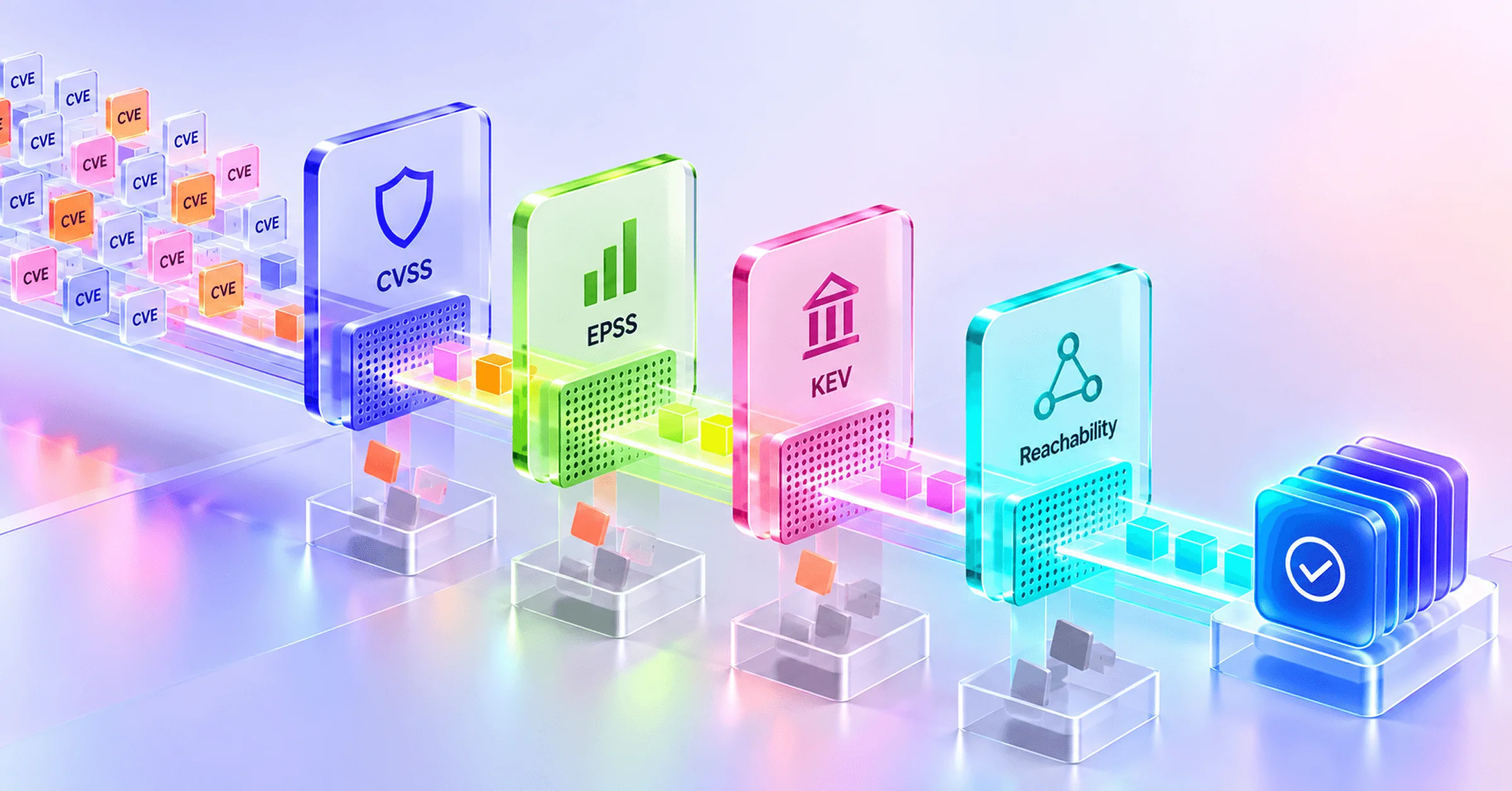
Prioritizing runtime findings based solely on CVSS scores or raw cloud provider severity ratings is fundamentally flawed in modern cloud environments. Without reachability analysis and code-level execution context, teams end up burning hundreds of engineering hours patching unreachable vulnerabilities while ignoring toxic, highly reachable attack paths. Evidence of active exploitation – the CISA Known Exploited Vulnerabilities catalog, for instance – belongs in that calculation alongside reachability, not after it.
A high-severity CVE (e.g., CVSS 9.8) in a container dependency sounds alarming on paper. However, if that container resides in an isolated internal cluster, behind two layers of firewalls, with a read-only filesystem, and the vulnerable function is never actually executed by the application, the real-world risk is close to zero.
Conversely, a “medium” misconfiguration (such as a slightly permissive IAM policy or an exposed non-production S3 bucket) can represent a critical vulnerability if it sits on an internet-facing workload connected to sensitive customer data.
3. The Console Fix Mirage (Symptom vs. System)
When runtime alerts fire, security analysts or site reliability engineers (SREs) are often tempted to “quick-fix” the issue directly in the AWS, Azure, or GCP management console. The alert turns green because the live misconfiguration was corrected, but the root cause is not addressed because the underlying template has not been changed and will keep causing the issue when it is used to overwrite the individual console-level changes effected with such “quick” fixes.
| Console-Level Quick Fix | Root-Cause Code Fix |
| Fixes: Deployed runtime resource only | Fixes: Upstream IaC template (Terraform/CloudFormation) |
| Result: Creates silent configuration drift | Result: Enforces immutability across all environments |
| Next Deploy: Overwritten by CI/CD pipeline | Next Deploy: Clean code deployed everywhere automatically |
| Class Elimination: No – the same bug recurs next sprint | Class Elimination: Yes – prevents future re-introduction |
The OX Security Angle: Unifying Code to Cloud in a Single Platform
Bridging the gap between cloud runtime security and development requires moving beyond disjointed point solutions. The traditional approach forces teams to manually glue together separate tools – a CNAPP for cloud posture, static analysis (SAST/IaC) for code scans, and custom scripts or spreadsheets to correlate findings into Jira tickets.
Eliminating Hand Correlation with OX Cloud
OX Cloud replaces manual triage by tying every runtime finding back to the code that produced it. As the infrastructure and runtime component of the OX AINAPP – alongside OX Code, OX VibeSec, and the OX Agentic Pentester – it links every deployed cloud asset to its source repository, Infrastructure as Code (IaC) file, and owning engineering squad.
When a cloud exposure occurs, OX Cloud delivers:
- Instant Origin & Owner Identification: Code Projection Technology maps deployed cloud resources to the exact Git repository, file path, line number, and commit author responsible for the deployment.
- Reachability-Based Prioritization: Evaluates whether a runtime cloud risk is actually connected to running, active application code – deprioritizing exposures that are not reachable so teams focus on exploitable attack paths.
- Pre-Runtime Prevention: Feeds runtime visibility back into the build pipeline. By analyzing IaC templates and code changes during pull requests, OX identifies misconfigurations in those templates before they reach production, the control that NIST’s Secure Software Development Framework describes as addressing vulnerabilities before release.
By connecting code context directly to runtime telemetry, security teams can stop reacting to cloud alerts and start delivering permanent, developer-friendly fixes at the root cause.
From Reactive Triage to Root-Cause Security
CNAPPs have provided indispensable visibility into cloud posture and complex runtime attack paths, but their visibility ends at the cloud boundary. Reporting an exposed S3 bucket or a vulnerable container is only half the battle; permanently fixing the vulnerability requires knowing which repository created it, which team owns it, and which line of code needs to change.
Bridging the divide between CloudSec and AppSec demands a code-aware view of runtime security. By enriching cloud findings with source-code context, organizations transform raw cloud telemetry into actionable, developer-ready work items—eliminating alert fatigue, defeating configuration drift, and stopping recurring vulnerability classes at their origin.
Ready to eliminate manual triage and trace your cloud findings back to their exact source code? Explore how OX Cloud delivers real-time code-to-cloud correlation, reachability analysis, and root-cause remediation, or find out more by requesting a live demo today.
FAQs
Code-to-cloud security is the practice of securing applications’ entire lifecycles – repositories, build pipelines, and running in-production cloud workloads – under one set of controls rather than separate tools at each stage. It allows your risk to be judged across stages rather than within one span by scanning source and infrastructure-as-code templates before merge, hardening the pipeline that deploys them, and monitoring what reaches the production stage.
No, it complements and enhances your CNAPP. While CNAPPs excel at detecting live cloud posture risks, attack paths, and active threats in runtime, adding source-code context fills the “last-mile gap” by linking those runtime detections back to the underlying Infrastructure as Code (IaC) files, repositories, and engineering owners responsible for fixing them.
Reachability analysis evaluates whether the vulnerable code path behind a finding is actually invoked in the running application. By filtering out isolated or dead-code vulnerabilities that cannot be exploited from the outside, teams can deprioritize low-risk findings and focus on critical, reachable attack paths.
Direct console fixes address the symptom rather than the root cause, leading to “configuration drift.” The next time developers deploy code through the CI/CD pipeline, the automated deployment will overwrite the console tweak, reintroducing the original security vulnerability.
By tracing a deployed cloud asset back to its source Git repository, commit history, and IaC template, the platform automatically identifies the exact squad or developer who authored the infrastructure code, bypassing central DevOps queues and routing actionable tickets directly to the right owner.
Code-to-cloud correlation is the bidirectional mapping between source artifacts and deployed cloud resources. It links an IaC template, application file, or container manifest to the live asset it produced, so a runtime finding can be resolved to the repository, file path, commit, and owning team behind it, and a code change can be traced forward to what it will alter in production.
Not on its own. A CNAPP observes the running environment, so it can identify the exposed resource, its configuration, and its position in an attack path, but it holds no repository, commit, or authorship metadata. Attributing the finding to a developer requires correlating the cloud asset with the source control system that defined it.