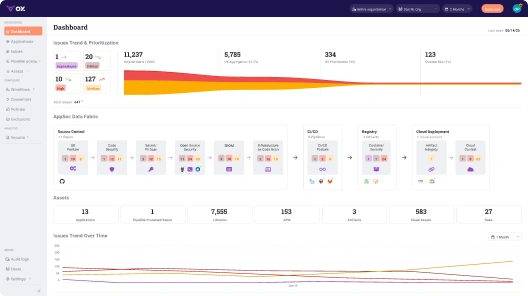

Every AppSec team has dashboards full of numbers — scans run, CVEs counted, tickets closed. Most of it looks impressive.
Most of it doesn’t matter. If you actually want to understand how effective your product security program is, stop measuring activity and start measuring outcomes.
The VibeSec Angle — Learning to Think with AI
We’re entering a world where AI isn’t just another tool — it’s a teammate. And like training a dog, you eventually realize you’re not really teaching it — you’re teaching yourself how to act around it. At first, you try to make AI understand what you mean. Then you realize the real challenge is learning how to communicate what you want. You start structuring context, defining outcomes, and shaping intent — and that’s when it clicks. AI amplifies good thinking — and exposes bad prompts all the way up to hallucinations. The best AppSec leaders will first learn how to think with AI — and then make it reliable enough to build real feedback loops. You should focus on key performance indicators (KPIs) as the basis for AI — they define the outcomes you want it to optimize. KPIs become the signal that helps AI learn what success looks like. That’s how you move from simply automating tasks to actually accelerating judgment.
This mindset isn’t about more dashboards; it’s about clarity. Define what you want AI to improve — and give it the right signals to get smarter with you.
1. % of Developers Covered — Shift-Left Adoption
If developers aren’t covered, you’re not doing product security — you’re running scans in the dark. This KPI tracks how many active developers are protected by security sensors across their code, builds, and dependencies. Why it matters: AppSec only works when it lives inside the dev workflow. Full developer coverage means security isn’t a gate — it’s part of the engineering culture.
2. % of Assets Covered — Visibility Completeness
You can’t secure what you can’t see. This KPI measures how much of your codebase, services, and infrastructure are actually monitored by your AppSec tools. Why it matters: Every unscanned repo, forgotten container, or orphaned API is an open window. Full visibility is table stakes for serious security.
3. Detection Accuracy — Signal Quality
Finding vulnerabilities is easy. Finding real ones is the hard part. This KPI looks at your false positives and missed detections — the true test of how well your tools and rules are tuned. Why it matters: Developers don’t fix what they don’t trust. Precision builds credibility, and credibility keeps security moving at engineering speed.
4. % Remediation Within SLA — Risk Reduction
Discovery doesn’t reduce risk — remediation does. This KPI measures what percentage of issues are fixed within SLA windows by severity. Why it matters: You can’t claim success if your backlog keeps growing. Closing issues on time means your program isn’t just finding problems — it’s solving them.
5. Defects Created vs. Remediated — Security Debt Trend
Security isn’t static — it’s a constant balance between debt and paydown. This KPI tracks the ratio of new vulnerabilities created versus those fixed. Why it matters: If you’re creating more risk than you’re closing, you’re losing. A downward trend means your defenses are keeping pace with your delivery.
Bringing It All Together
These five KPIs give you the full picture: Coverage — who and what’s protected. Accuracy — can you trust what you’re seeing. Velocity — are you closing faster than you’re breaking. Everything else is noise. If your AppSec dashboard isn’t tracking these five, you’re not measuring progress — you’re measuring motion. Focus here, drive these up, and you’ll have a program that doesn’t just report on security — it delivers it.