
Scan your whole stack


From OX Research Newsroom






Are you using nemo-fabric-runtime?
Find out what’s in your code.
Scan your apps free in minutes (opens in a new tab) Read the latest findings
Latest version: v0.8.0a20261126
nemo-fabric-runtime was last scanned on 26 Nov 2026 at version 0.8.0a20261126. Risk score 0 of 100. No malicious behavior was detected.
| Version | Published | Status |
|---|---|---|
| 0.8.0a20261126 LATEST | 26 Nov 2026 | No rules fired |
| 0.8.0a20261125 | 25 Nov 2026 | No rules fired |
| 0.8.0a20261124 | 24 Nov 2026 | No rules fired |
| 0.8.0a20261123 | 23 Nov 2026 | Not shown |
| 0.8.0a20261122 | 22 Nov 2026 | Not shown |
Findings for v0.8.0a20261126. The score is a capped sum of the weights of the rules that fired — not CVSS, not exploitability, and not a probability. It is not comparable across packages with different scan coverage.
The score describes 0.8.0a20261126; other versions have their own rules, not their own score.
The publisher’s own README, as collected from the registry.


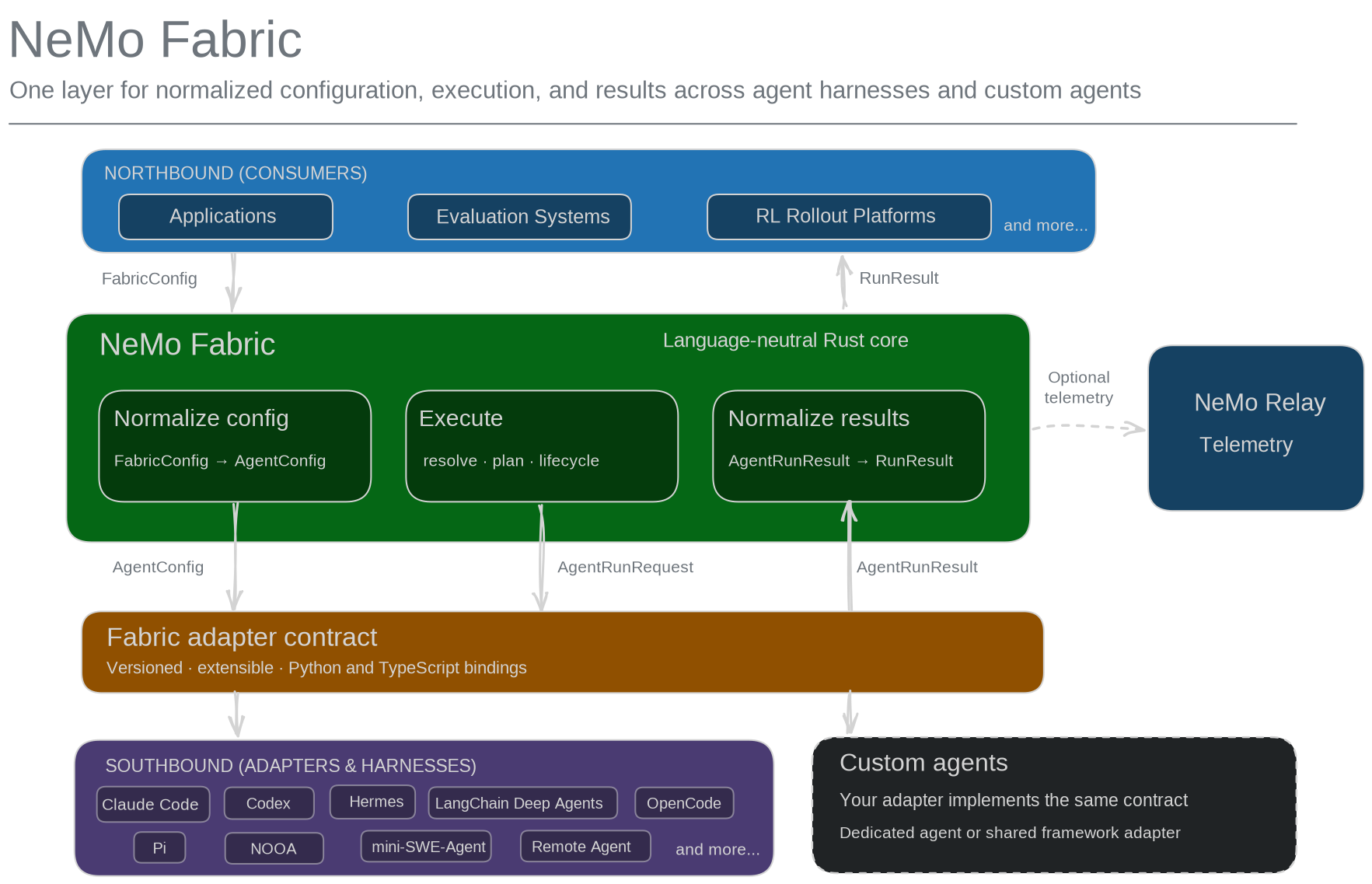
nemo-fabric-runtime provides the Python SDK and native Rust bindings for
NVIDIA NeMo Fabric, a runtime execution layer for agents.
Typically this is installed using the nemo-fabric meta package.
pip install nemo-fabricInstalling the runtime package directly is equivalent:
pip install nemo-fabric-runtimeFor the default embedded NeMo Relay ATOF streaming path, install the runtime's
streaming extra to include the matching collector:
pip install "nemo-fabric-runtime[streaming]"The package exposes the nemo_fabric Python module for typed agent
configuration, validation, run planning, runtime lifecycle management,
normalized results, artifacts, diagnostics, and telemetry references.
Refer to the NeMo Fabric documentation for installation and usage guidance. Source code is available in the NVIDIA NeMo Fabric repository.
The package also installs fabric-agent-ctl, a command bridge and foreground runtime server for controlling multiple independent SDK runtime IDs inside one sandbox. Refer to the NeMo Fabric runtime server guide for SDK command mappings, runtime IDs, socket ownership, and sandbox lifecycle.
Find threats in your stack.
OX Radar can check high-priority threats, like critical package CVEs, against your context.
Each incident is marked Detected or Not Detected with a remediation plan and proof all tracked in the Response Center.
The probe returned only these fields for this server — auth requirement, protocol and tool list weren’t observed, so they’re not shown (never guessed).
The publisher’s own links, as the registry reports them. These are not sources for the assessment on this page.
Read the latest findings