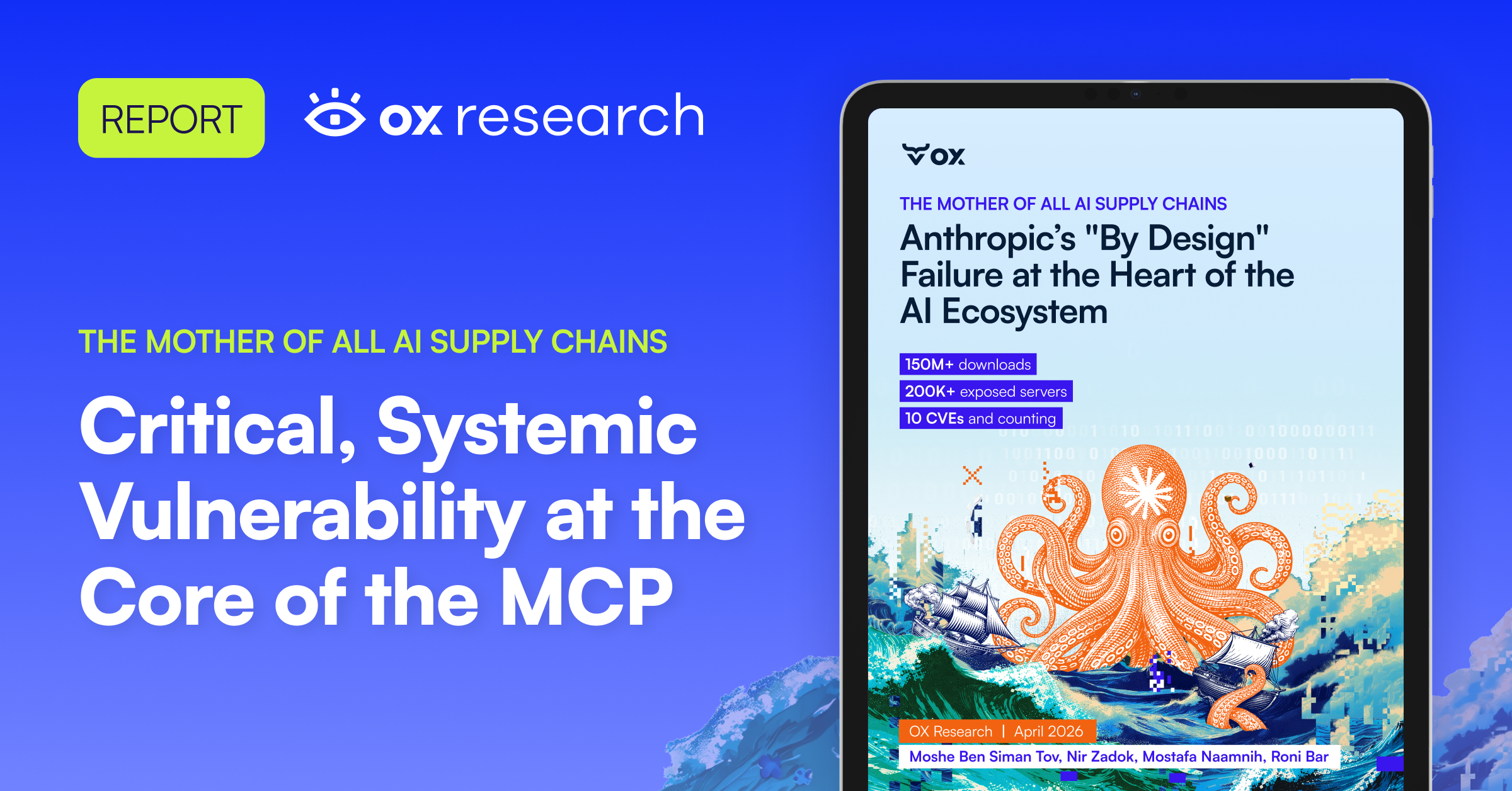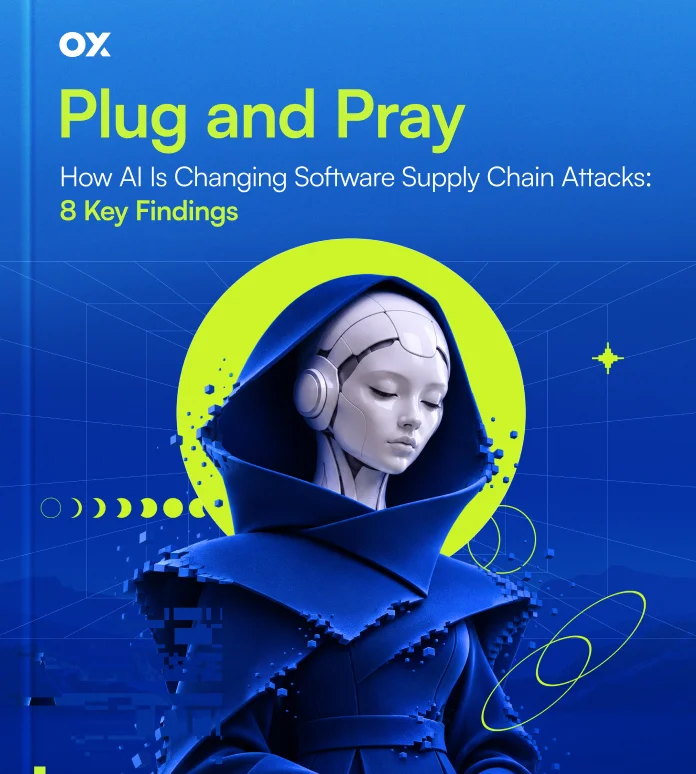
AI agents are taking instructions from third-party tools, servers, and packages. And attackers are learning how to exploit that trust.
OX Security analyzed 542,207 components across npm, PyPI, MCP servers, and Agent Skills between July and October 2026. The research reveals two fundamental shifts: attacks are moving from execute to instruct, while the traditional signals organizations use to establish trust in software are no longer enough.
Inside the Report
- The shift from executing code to manipulating AI agents. How prompt injection and tool poisoning exploit the instructions agents follow and the permissions they already have.
- The MCP identity problem. Why nearly one-third of tracked MCP servers have no identifiable source owner, and why just 0.4% disclose usage information.
- The code you review isn’t necessarily the code that runs. How remote infrastructure and repository mismatches undermine traditional security reviews.
- Attackers favor speed and scale over stealth. What the data reveals about malicious components, publisher concentration, and shared MCP server templates.
Key Findings at a Glance
22% vs. 16% | AI Supply Chain Attacks Are Moving from Execute to Instruct
Prompt injection and tool poisoning appeared in 22% of flagged MCP servers, compared with 16% for install or import-time execution.
82% | Most Malicious Components Were Born Malicious
82% of researcher-confirmed malicious components were already malicious in their first observed version. They didn't turn bad through a later update.
44% | Two Accounts Controlled 44% of Flagged MCP Servers
One account published 2,364 servers in just 17 days. A handful of publishers can create common points of failure across thousands of seemingly independent tools.