Scan your whole stack


From OX Research Newsroom






Are you using cocobrown?
Find out what’s in your code.
Scan your apps free in minutes (opens in a new tab) Read the latest findings
Latest version: v0.5.0
cocobrown was last scanned on 29 Nov 2026 at version 0.5.0. Risk score 0 of 100. No malicious behavior was detected.
| Version | Published | Status |
|---|---|---|
| 0.5.0 LATEST | 29 Nov 2026 | No rules fired |
| 0.4.0 | 27 Nov 2026 | No rules fired |
Findings for v0.5.0. The score is a capped sum of the weights of the rules that fired — not CVSS, not exploitability, and not a probability. It is not comparable across packages with different scan coverage.
The score describes 0.5.0; other versions have their own rules, not their own score.
The publisher’s own README, as collected from the registry.
Compiler-Inspired 2D & 3D Mathematical & Algorithmic Animation Engine
Zero LaTeX · Zero FFmpeg Required · Pure-Rust Timeline IR & Media Pipeline · CPU + Vello 2D GPU + Filament PBR 3D · Live Hot-Reload





English | 简体中文
2D Showcase · 3D PBR Showcase · 3-Min Benchmark vs. Manim · Quick Start · Usage Guide (USAGE.md) · Architecture (DESIGN.md) · Roadmap (ROADMAP.md)
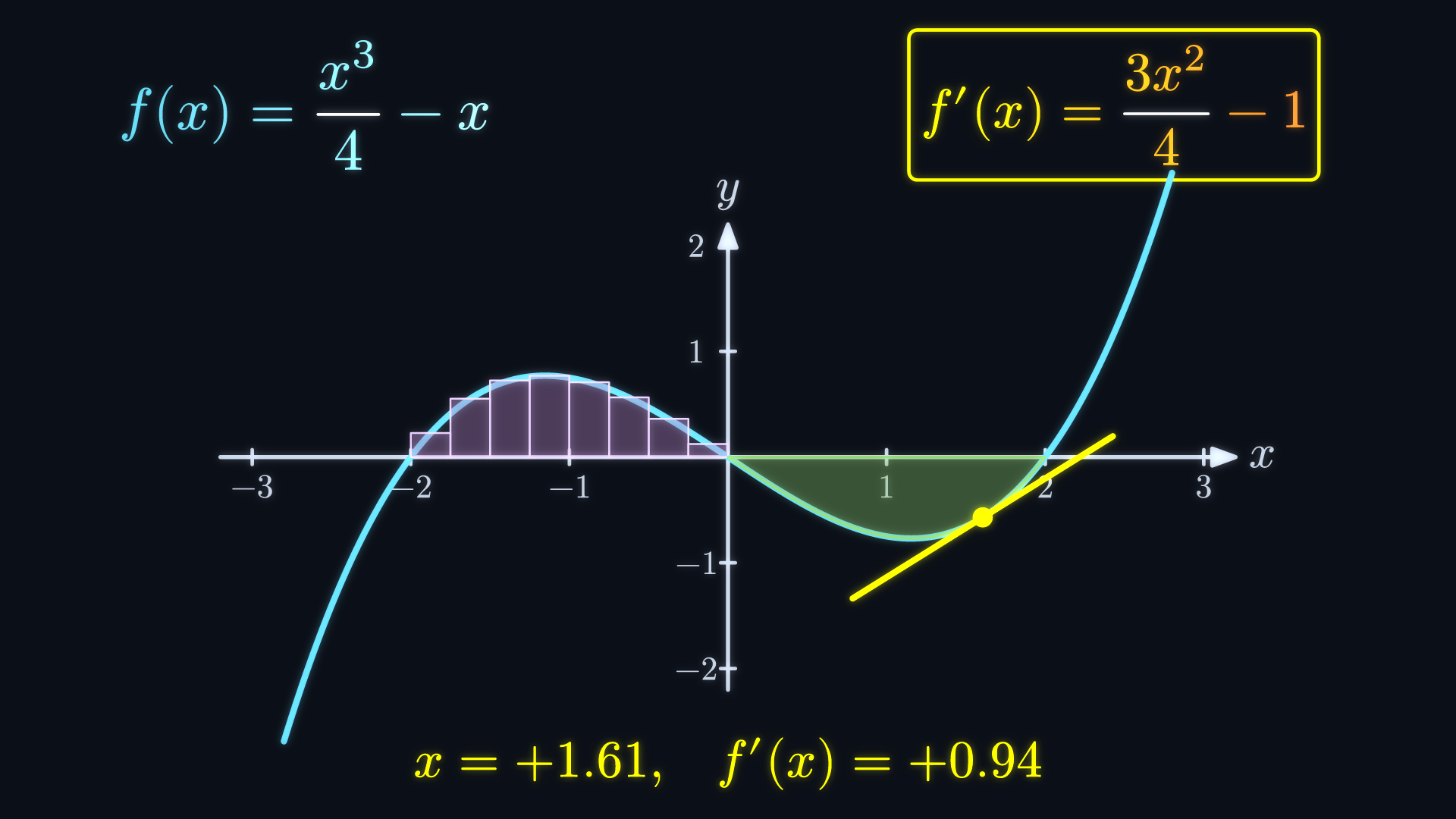
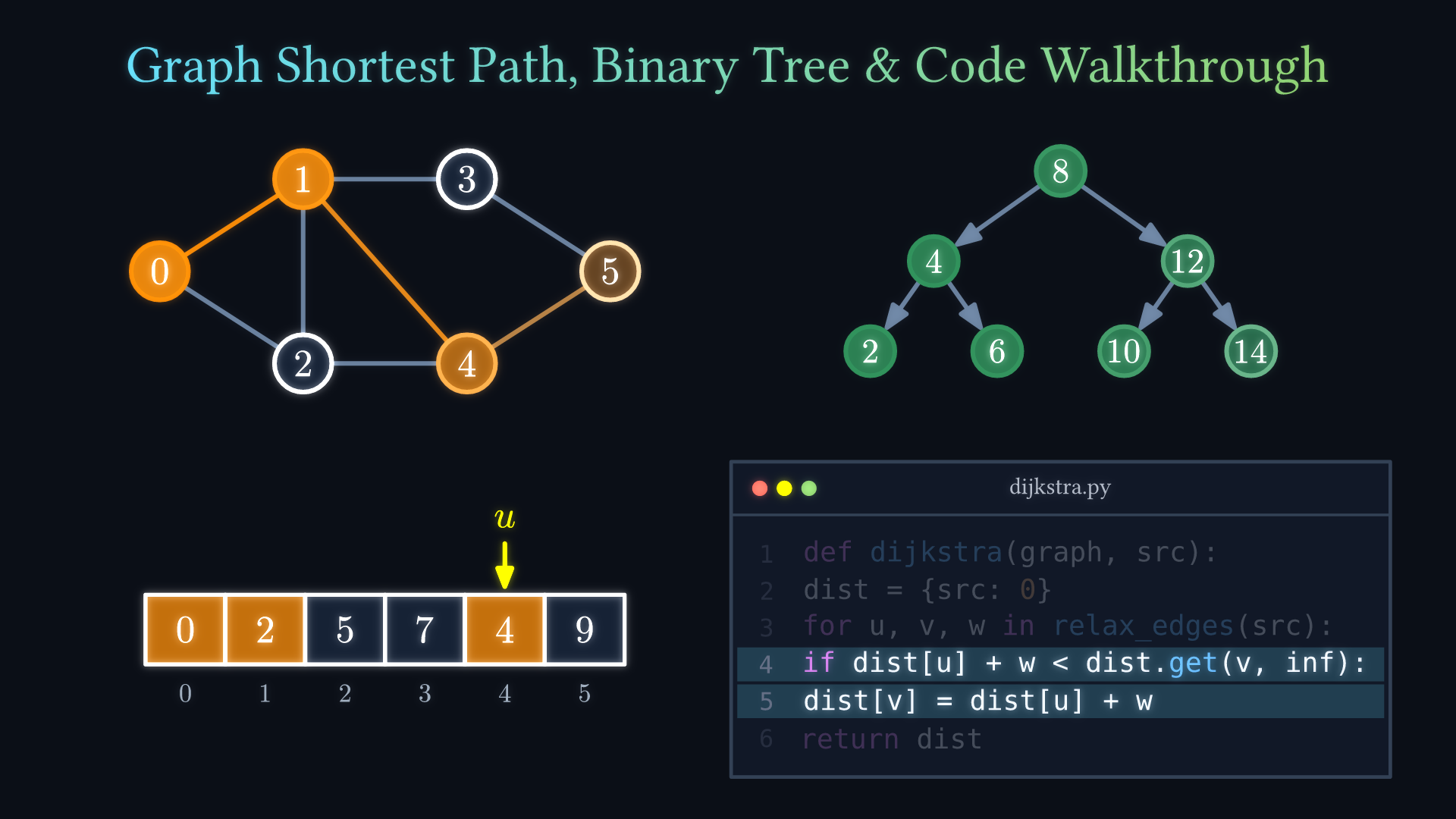
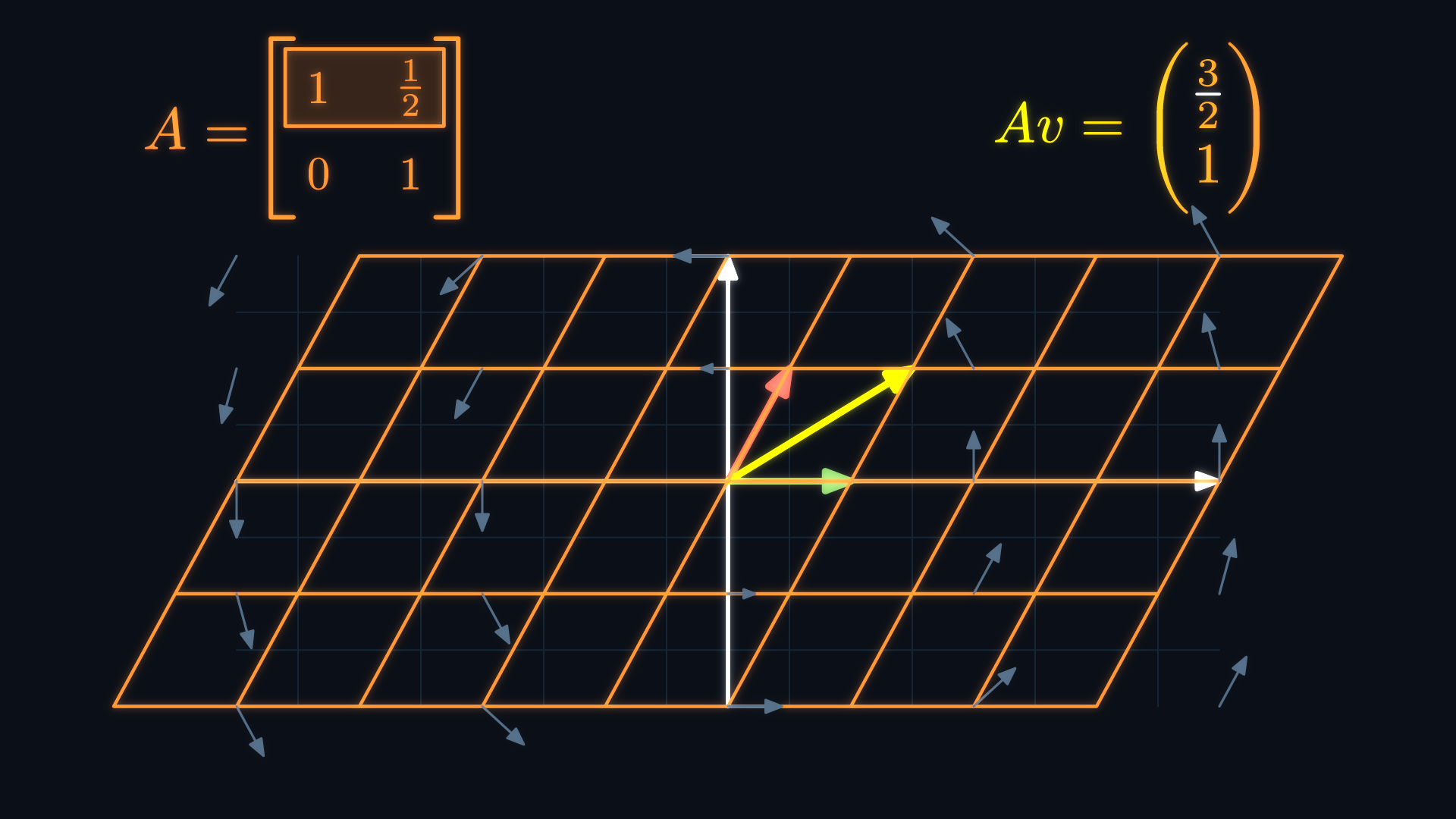
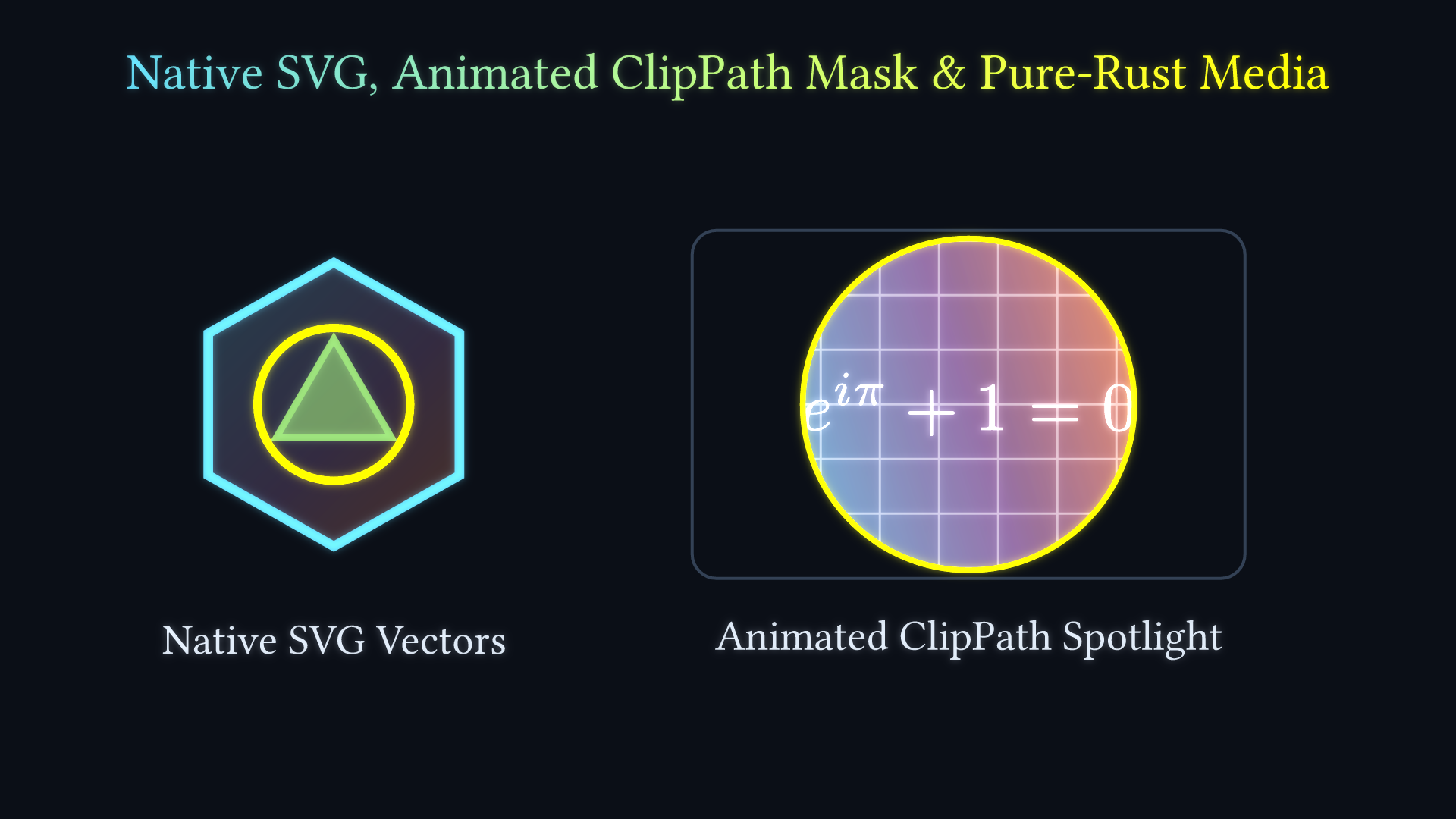
All four 1080p acts and the animated 24fps preview below are compiled directly from the single-file demo.py — zero LaTeX, zero FFmpeg required:

| Act 1: Glowing SymPy Calculus, Gradients & Camera2D | Act 2: Graph, BinaryTree, Array & Syntax-Highlighted CodeBlock |
|---|---|
 |
 |
| Act 3: 2D Linear Algebra Shear, Vector Field & Matrix | Act 4: Native Vector SVG & Animated ClipPath Spotlight |
 |
 |
Run the full 2D showcase locally to generate demo.mp4 (auto-prefers system FFmpeg when available, seamlessly falling back to built-in pure-Rust H.264/MP4) or inspect it interactively:
python demo.py
# Or launch the persistent GPU live-preview window (editing demo.py hot-reloads in place)
cocobrown preview demo.pycocobrown v0.5.0 ships with an independent Google Filament v1.81.0 PBR 3D engine (Scene3D, Mat, Anim3D) featuring AgX / PBR Neutral tone mapping, PCSS+CSM soft shadows, GTAO, SSR, HDR Bloom, GPU morph targets, analytic math surfaces, refractive glass, 3D extruded Typst typography, and crisp 2D HUD compositing — rendered directly from examples/showcase_3d_5s.py:
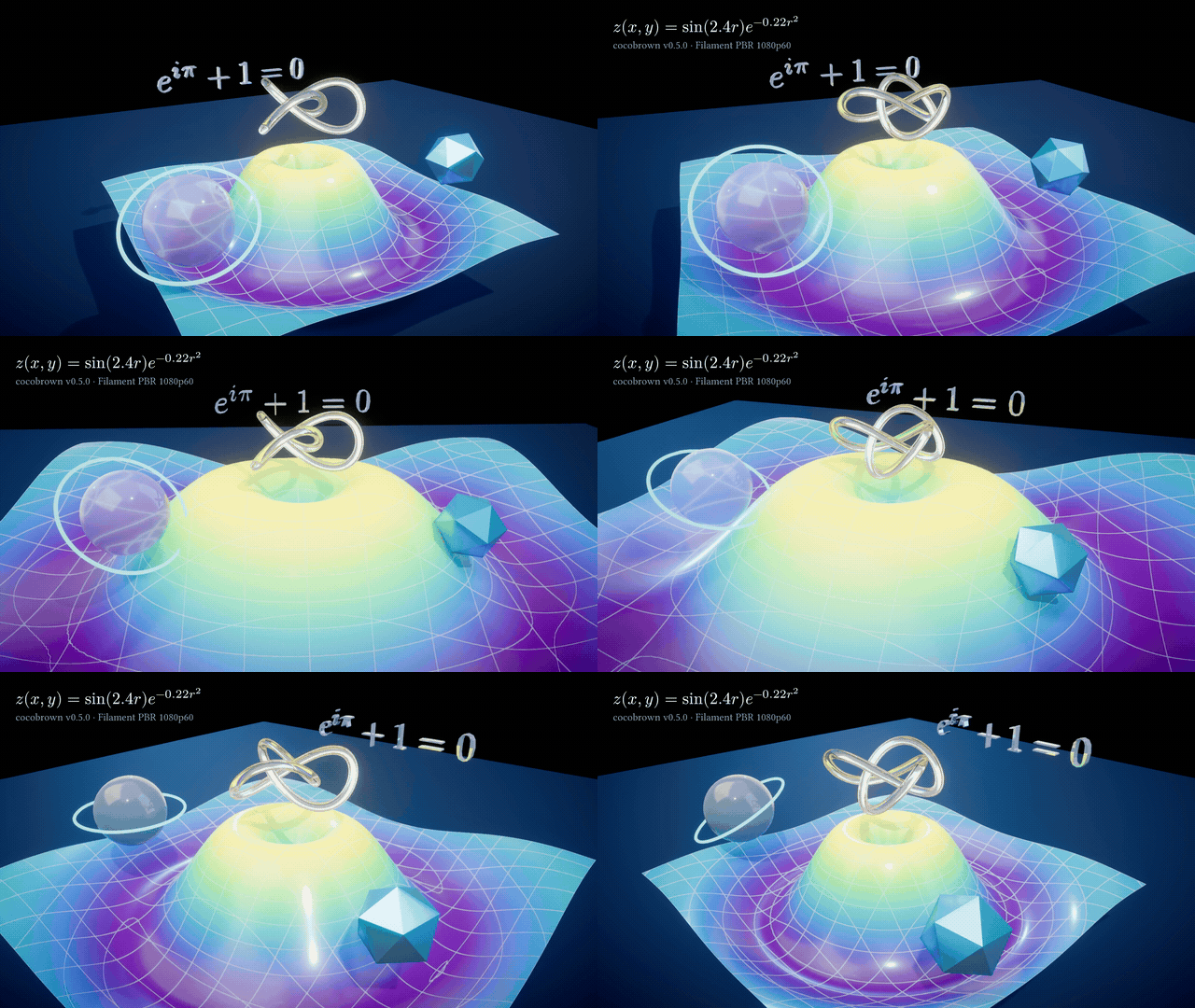
# Render the 5-second 1080p60 Cinema PBR showcase locally
python examples/showcase_3d_5s.pyTo measure real-world long-form production performance (not a toy 3-second clip), we built an apples-to-apples 180.0-second (3-minute, 5,400-frame @ 1920×1080, 30fps) complex 2D mathematical animation across 6 dense acts (80.6% continuous active motion, 19.4% teaching pauses, 580 timeline segments, peak 103 simultaneously animated entities):
Axes, Riemann sum, integral area, sliding tangent + live numeric readout)sin(kx) wave sweep + Fourier square-wave S₁ → S₃ → S₅ → S₉ morphs + BraceNumberPlane, 25-arrow vector field, shear & rotation grid/basis transformationsGraph shortest-path animation + 7-node BinaryTree inorder traversalArray + pointer swaps, 3×3 Matrix highlights & TransformMatchingTex1920×1080 @ 30fps, 180.0s / 5,400 frames)| Mode / Configuration | Total Wall Time | Effective Throughput | Video Size | Speedup vs. Manim |
|---|---|---|---|---|
| Manim CE 0.22.1 — Cold render (fresh media dir, MiKTeX + Cairo + FFmpeg) | 145.47 s (2m 25s) | 37.1 fps | 7.24 MB | 1.00× (cold baseline) |
| cocobrown — CPU + Built-in Pure-Rust MP4 (zero FFmpeg, cold) | 56.47 s | 95.6 fps | 26.62 MB | 2.58× |
cocobrown — CPU (tiny-skia + rayon) + FFmpeg libx264 (cold) |
21.40 s (build: 0.21 s) | 252.4 fps | 8.47 MB | 6.80× |
cocobrown — GPU (vello + wgpu) + FFmpeg libx264 (cold) |
15.24 s (build: 0.13 s) | 354.4 fps | 8.12 MB | 9.55× |
| Manim CE 0.22.1 — Incremental 1-edit (change final 2s formula, Manim cache ON) | 51.86 s | 104.1 fps | 7.26 MB | 1.00× (inc. baseline) |
cocobrown — Incremental 1-edit (SHA-256 pure-Rust cache, 446/483 segs reused, 61 frames rendered) |
3.00 s | 1,797.3 fps | 45.69 MB | 17.3× (48.5× vs. Manim cold) |
Hardware & Transparency Notes: Measured on Windows 11 ARM64 · Qualcomm Snapdragon X Plus X1P64100 (10-core Oryon CPU) + Qualcomm Adreno X1-85 GPU.
cocobrownran as a native--releasewin_arm64extension (Python 3.13 ARM64);Manim CE 0.22.1ran on Python 3.12win_amd64(Windows Prism emulation, asmanimpangodoes not publish Windows ARM64 wheels) with MiKTeX (latex+dvisvgm) andffmpeg. Both produced verified180.00sH.264.mp4videos. Reproduce locally:python benchmarks/run_benchmark.py --size 1920x1080 --fps 30Full scripts & raw JSON: benchmarks/bench_scene_cocobrown.py, benchmarks/bench_scene_manim.py, benchmarks/run_benchmark.py, benchmarks/results_3min.json.
v0.5.0, Google Filament v1.81.0):Scene3D, Mat, Anim3D API: 6 curated stage presets (studio, dark_neon, paper_light, blueprint, dramatic, transparent), 3 quality tiers (draft, standard, cinema), 13 PBR materials (lacquer, metal, anodized, velvet, refractive glass, emissive, hologram, analytic math-surface grid/contours, shadow catcher), AgX / PBR Neutral tone mapping, PCSS+CSM soft shadows, GTAO, SSR, Bloom, DoF, and height fog.MorphTarget transitions, 3D tube curves, marching-cubes isosurfaces, instanced vector fields, 3D extruded Typst typography (extrude_tex), billboard tex3d, 2D-to-3D card_from_2d, crisp 2D s.hud overlays, and a native 60fps interactive 3D preview window.typst 0.15 + compact New Computer Modern Math fonts, walking FrameItem trees and extracting skrifa outlines directly into kurbo::BezPath with full Glyph.span preservation (Write, sub-expression coloring, TransformMatchingTex).encoder="auto" automatically discovers a usable system ffmpeg (checking PATH and standard WinGet/Scoop/Homebrew/Linux install paths) for peak libx264/HW encoding throughput & compact MP4s — and seamlessly falls back to built-in pure-Rust H.264/AAC MP4 (rusty_h264-encoder + muxide + rusty_aac) when ffmpeg is not installed. Animated GIF (gif), multi-format audio decoding/mixing (symphonia for WAV/MP3/OGG/FLAC/AAC), and SHA-256 incremental caching all work out of the box with zero external dependencies, while encoder="builtin" forces pure-Rust and encoder="ffmpeg" unlocks transparent VP9 .webm & 10-bit alpha ProRes 4444 .mov.Timeline IR: Python scripts declare entities, layouts, and choreography during build time (~0.2s even for a 3-minute scene). After finish(), cocobrown releases the Python GIL and renders with zero per-frame Python callbacks.s.add_sound(...) (gain, fade-in/out, trim) or align animations automatically to narration clips via with s.voiceover("narration.wav") as dur:. Audio tracks are hashed independently from video segments — re-recording voiceover re-renders 0 video frames.Graph, DiGraph, BinaryTree (deterministic spring/circular/grid/tree layouts, shortest-path & traversal animations), Array + ArrayPointer, Stack, Queue.Matrix (auto-fitted brackets, row/col/entry highlights, elementary row/col swaps), Table, and CodeBlock (pure-Python multi-language syntax highlighting + highlight_line / focus_lines).cocobrown[sympy]): NumberLine, Axes, NumberPlane, automatic asymptote splitting, exact analytic derivatives/Taylor series, 2D vector fields, 2×2 matrix transforms, and automatic Tracker reactivity.s.image(...) (PNG/JPEG/RGBA deduplicated in .timeline v4) and s.svg(...) (native vector paths via usvg with Y-up flip, gradients, strokes, and Draw/Write support).entity.clip_to(mask) with parent-inherited hierarchical masks, animated mask invalidation, and exact CPU (tiny-skia::Mask) / GPU (vello::push_clip_layer) parity.Camera2D pan/zoom/roll, CameraFocus, CameraReset, and s.camera_follow / s.start_camera_follow tracking moving entities.LinearGradient, RadialGradient, optional s.bloom(...), and cocobrown preview zero-readback winit + wgpu + vello window with millisecond IPC hot-reload preserving the playhead.Python Modular API (colors · anim · camera · entity · scene · coords · graph · structures · widgets · audio · assets · symbolic)
│ build time (~0.2s): cursor choreography, auto-layout, lambdify & Tracker/CameraFollow baking
▼
Pure-Data Timeline IR (Camera2D + Bloom + AudioClips + SoA SceneArena + ResourceTable[Geom/Morph/Image] + Tracks)
│ static validation: overlap conflict detection, parent/clip acyclicity
▼
Compile-Time Optimizer (RenderPlan)
│ O(n log n) sweep-line → static-segment 1-frame reuse + static bg/fg layer cache + SHA-256 segment hashes
├───────────────────────────────┬───────────────────────────────┐
▼ ▼ ▼
CPU Backend (tiny-skia) GPU Backend (vello + wgpu) Live Preview (winit + wgpu)
rayon frame parallelism 3-slot async readback ring zero-readback swapchain + IPC hot-reload
└───────────────┬───────────────┘
▼ (optional dual-lobe HDR Glow / Bloom + symphonia/rusty_aac audio mix)
Modular Media Subsystem (crates/cocobrown-core/src/media/)
├─ System FFmpeg (Auto-Preferred for MP4 when found): libx264 · NVENC/VideoToolbox/QSV/AMF · WebM Alpha · ProRes 4444 MOV
└─ Built-in Pure-Rust (Auto-Fallback for MP4, Default for GIF/Audio/PNG): rusty_h264 + muxide + rusty_aac · gif · PNG Sequencepip install cocobrown
# Optional: enable the SymPy symbolic math bridge
pip install "cocobrown[sympy]"abi3 stable ABI wheel)PATH only if you want libx264/hardware encoders, transparent .webm, or ProRes 4444 .movmaturin when building from source# 1. Create a virtual environment and install build/test tools
uv venv
uv pip install maturin pytest
# 2. Build and install the Rust core + Python extension (--release for full throughput)
maturin develop --release
# 3. Optional: enable the SymPy symbolic math bridge
uv pip install sympyVerify installation:
cocobrown --version
python -c "import cocobrown as cb; print(cb.__version__, 'gpu:', cb.gpu_available())"Create a glowing, camera-directed SymPy calculus animation with native Typst math, gradient typography, voiceover sync, and zero-FFmpeg MP4 export in ~25 lines:
Find threats in your stack.
OX Radar can check high-priority threats, like critical package CVEs, against your context.
Each incident is marked Detected or Not Detected with a remediation plan and proof all tracked in the Response Center.
The probe returned only these fields for this server — auth requirement, protocol and tool list weren’t observed, so they’re not shown (never guessed).
The publisher’s own links, as the registry reports them. These are not sources for the assessment on this page.
Read the latest findings