
TL;DR
- Vibe Security is the practice of securing software that AI writes by governing agent permissions, placing security decisions at generation, and maintaining full provenance for produced artifacts.
- The transition to vibe coding shifts human developers from primary authors to reviewers of massive synthetic diffs, rendering manual peer review insufficient as a safety net. In Sonar’s January 2026 State of Code developer survey, respondents said 42% of the code they commit is already AI-generated or AI-assisted.
- AI-native security engineering requires building five distinct capabilities across the organization: prompt-layer governance, generation-time control, provenance tracking, exploitability evidence, and velocity measurement.
- Vibe Security differs from DevSecOps by assuming the primary author is an autonomous agent that cannot be retrained through traditional developer education or bounded by human typing speed.
- Generation-time controls intercept insecure code before commit, but because they do not decrease existing technical debt, Vibe Security operates alongside existing application security (AppSec) programs rather than replacing them.
Why Vibe Coding Security Cannot Rely on Code Review
Vibe Security is the practice of securing software that an AI agent, rather than a person, wrote. Development has shifted from structured, line-by-line engineering to conversational iteration. In this paradigm, developers describe desired software behaviors in natural language, autonomous AI agents generate the underlying code, and engineers iteratively refine the prompt until the application’s observed output matches expectations.
While this shift accelerates feature delivery, it also destabilizes it: DORA’s 2025 research finds higher AI adoption associated with an increase in both software delivery throughput and instability of software delivered. As detailed in OX Security’s analysis of vibe coding risks, on vibe-coded projects the human developer is no longer the primary author. Tools for securing AI-generated code in real time address one layer of that shift; Vibe Security is the practice around them.
The human engineer who once acted as the primary security checkpoint is now forced to review vast pull requests they did not write. Those pull requests frequently contain opaque dependencies, synthetic logic, and non-deterministic patterns that the reviewer cannot fully account for. In Sonar’s 2026 State of Code developer survey, only 48% of developers said they always verify AI-generated code before committing it. Of those respondents who do review AI-generated code, 38% said that it takes more effort than reviewing a colleague’s code. This is leaving security teams struggling to govern software arriving at machine speed.
What Is Vibe Security?
Vibe Security is the practice of securing software that AI writes, governing what agents are permitted to do, placing the security decision at the moment code is generated, and holding provenance for what they produced.
Vibe Security is neither a single product category nor a marketing rebrand of legacy application security. Instead, it represents the specific operating model application security must adopt as AI writes a growing share of production software. Developers in the same Sonar survey put AI-generated or AI-assisted code at 42% of what they commit today, and expect 65% by 2027.
This discipline sits alongside the terms already shaping modern software delivery. If vibe coding is the development practice of building applications via natural language prompts, Vibe Security is its essential security counterpart. Viewed from the systems architecture perspective, AI-native security engineering describes this exact same discipline from the engineering side, structuring pipelines to govern autonomous agents rather than trying to audit them after the fact.
What Are the Five Disciplines of AI-Native Security Engineering?
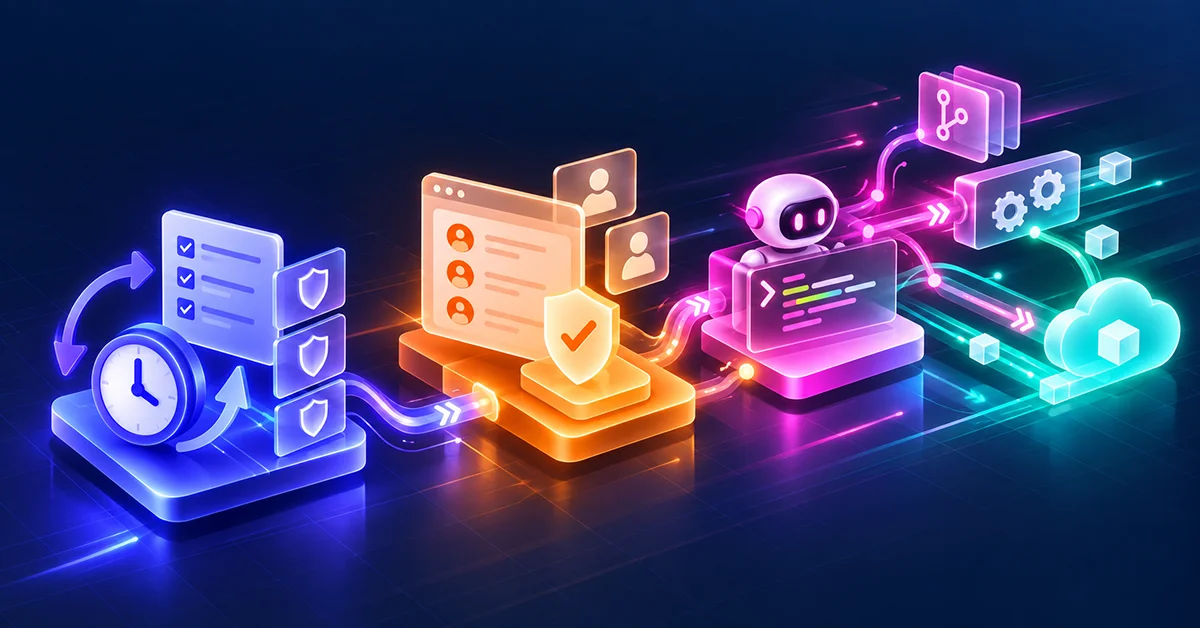
Building an AI-native security practice requires establishing organizational capabilities designed for machine-velocity development. Rather than relying on static control checklists, security leaders must staff, own, and operationalize five core disciplines across the software lifecycle.
#1. Prompt-Layer Governance
- Organizational Owner: Application Security Principal / AI Risk Officer.
- Core Decision: Decides which AI agents, Model Context Protocol (MCP) servers, model endpoints, custom skills, and third-party packages are authorized for use in development environments, along with their associated data access boundaries.
- Primary Artifact: An authorized AI Tooling & Permission Inventory that maps approved agents to specific repositories and data classification tiers.
- Operational Impact: Replaces shadow AI adoption, where developers integrate unvetted agent extensions or local MCP servers without security oversight, with a clear, governed permission matrix enforced directly at the environment boundary.
#2. Generation-Time Control
- Organizational Owner: Lead Security Engineer (Developer Experience).
- Core Decision: Determines whether generated code adheres to enterprise security standards at the exact moment of creation within the integrated development environment (IDE) or agent execution loop, catching unsafe code before it reaches the repository.
- Primary Artifact: In-Editor Security Policy Context Engine that injects organization-specific architectural rules and security constraints directly into the agent’s context window.
- Operational Impact: Moves security feedback upstream from code review to code generation. By delivering contextual guidance inside the developer’s agent loop, the team intercepts unsafe patterns as they are detected, recognizing that prevention at creation is far more efficient than post-commit remediation.
#3. Provenance and Inventory
- Organizational Owner: Security Operations & Incident Response Lead.
- Core Decision: Establishes lineage and accountability for software artifacts authored by non-human agents across the codebase, build pipeline, and production environment.
- Primary Artifact: The Software Lineage Graph, detailing the specific agent, prompt context, foundation model, external dependencies, and exposed application programming interface (API) endpoints associated with every merged pull request.
- Operational Impact: Resolves the accountability deficit of AI-authored code. When security incidents occur, incident response teams can trace runtime vulnerabilities back to the prompt decision and agent session that introduced them across code, dependencies, and APIs.
#4. Exploitability Evidence
- Organizational Owner: Vulnerability Management & Red Team Lead.
- Core Decision: Validates whether a detected weakness represents a real-world business risk by establishing whether a reachable execution path exists and whether the runtime environment permits weaponization.
- Primary Artifact: Verified Reachability & Exploitability Analysis Reports that filter out unexploitable findings prior to developer ticket creation.
- Operational Impact: Contains the backlog growth produced by high-volume code generation. Standard Common Vulnerability Scoring System (CVSS) severity scoring fails in AI-native pipelines because raw finding volume scales with generation velocity. By pairing reachability analysis with exploitability proof, the team routes developers only the exposures that can actually be exploited in production.
#5. Velocity Measurement
- Organizational Owner: Chief Information Security Officer (CISO).
- Core Decision: Evaluates the overall effectiveness of the security program based on how fast engineering teams ship software that is verified safe at creation, rather than counting legacy operational metrics.
- Primary Artifact: The Secure Velocity Scorecard, tracking deployment throughput alongside time-to-remediate and first-time pass rates for agent-generated pull requests.
- Operational Impact: Aligns security leadership directly with business enablement. Program success is no longer measured by scans completed or findings closed (which reward friction and volume) but by the velocity at which secure, AI-generated software moves into production (an approach formalized by OX as Secure Velocity).
How Does Vibe Security Differ from DevSecOps?
DevSecOps and Vibe Security share foundational principles: both prioritize pipeline automation, shift-left intent, and shared ownership between engineering and security. However, they operate on fundamentally opposing assumptions regarding who writes the software.
DevSecOps was built for human-authored code. Every control it establishes assumes a person at the keyboard who can attend security training, read policy documentation, take accountability for code ownership, and be gated by peer reviews. Vibe Security, by contrast, assumes the primary author is an autonomous agent. Agents cannot be retrained through traditional awareness programs, do not read static security policies, and generate code at a volume no manual approval gate can absorb.
| Assumption | What DevSecOps assumes | What Vibe Security assumes |
| Developer Education as a Primary Control | Training changes what the person at the keyboard writes | Policy has to reach the agent’s context window, not the developer’s memory |
| Peer Review as the Safety Net | A reviewer can read the diff they are approving | Review volume outruns reading speed, so the decision moves to generation |
| Human Typing Speed as the Volume Boundary | Backlog growth is bound by how fast people write code | Backlog growth scales with generation rate, so findings need exploitability evidence |
Three core assumptions of DevSecOps do not carry over into an AI-native engineering model:
- Developer Education as a Primary Control: Training developers on secure coding patterns does not prevent an agent from synthesizing insecure code patterns or introducing vulnerable dependencies during conversational iteration.
- Peer Review as the Safety Net: Expecting developers to manually inspect thousands of lines of synthetic diffs creates a false sense of security while delaying pipeline velocity.
- Human Typing Speed as the Volume Boundary: Backlog growth in traditional AppSec programs was bounded by how fast people wrote code; at generation speed, scanners without exploitability evidence produce more findings than any team can triage.
How Do You Build a Vibe Security Capability?
Establishing a functional Vibe Security capability requires a structured implementation sequence. Organizations frequently stall because no legacy security team explicitly owns agent governance in development environments, leaving a vacuum between application security, platform engineering, and enterprise AI governance.
Security leaders can operationalize this practice across five sequential steps:
- Inventory Shadow Agent Tooling: Audit local developer environments to discover which AI agents, IDE plugins, and MCP servers are currently running and under whose identity and access management (IAM) credentials.
Forces ownership question: Who owns the security of local development environments? - Establish the Permitted Permission Matrix: Define the authorized set of models, MCP servers, and repository access boundaries, while establishing a formal approval workflow for new agent tools.
Forces ownership question: Who approves new AI tools used by engineering?
- Inject Policy Into the Generation Loop: Move one high-priority security constraint (such as secret management or authorization patterns) directly into the agent’s IDE execution loop, measuring whether non-compliant patterns stop appearing in pull requests.
Forces ownership question: Who owns the developer experience inside the IDE/agent context? - Establish Code and Artifact Provenance: Implement lineage tracking for agent-authored pull requests before expanding coverage across external dependencies, container builds, and exposed API routes.
Forces ownership question: Who holds accountability for non-human code commits? - Set Delivery-First Success Metrics: Establish a baseline measure for safe shipping velocity before asking executive leadership to evaluate program return on investment (ROI).
Forces ownership question: How does security report performance to engineering leadership?
Common Mistakes and Limitations
Organizations attempting to establish an AI-native security practice frequently encounter the following critical failure modes:
- Treating Agent Governance as a Procurement Exercise: Managing agent adoption through software procurement reviews creates a static approval list that fails immediately. Developers continuously pull new local MCP extensions, custom skills, and model plugins. Governance must operate as a running, active inventory that discovers and monitors agent identities in real time.
- Deploying Generic AI Safety Guidance: Injecting generic, vendor-provided AI safety rules into developer IDEs generates noise that developers ignore. Effective generation-time control requires injecting the organization’s specific architectural policies, private library conventions, and cryptographic standards directly into the agent loop.
- Triaging Synthetic Diffs Without Exploitability Evidence: Running static analysis against machine-generated code without reachability or exploitability evidence overwhelms the people triaging its findings. Finding volume scales with generation volume, leading to massive backlogs and bypassed pipeline gates.
- Measuring ROI by Findings Closed: Evaluating program success based on closed ticket volumes rewards the generation of security work rather than the prevention of risk. When agents produce code faster than any review process can read, measuring closed findings incentivizes triage loops instead of verifying safe creation rates.
- Deferring Provenance Until an Incident Occurs: Attempting to retroactively determine which agent authored a vulnerable function during an active security incident is not reliably possible. Lineage tracking across prompts, agents, code, and APIs must be recorded continuously at the moment of generation.
Underlying these failure modes is a fundamental operational boundary: prevention at creation reduces what reaches the codebase, but it does not decrease existing vulnerability debt.
Vibe Security governs incoming, AI-authored software at machine velocity. However, it cannot remediate legacy systems, unmaintained third-party dependencies, or historical technical debt already residing in production. Consequently, an AI-native security practice operates alongside an enterprise’s existing application security program rather than replacing it entirely.
How OX Security Helps Secure AI-authored Software at Scale
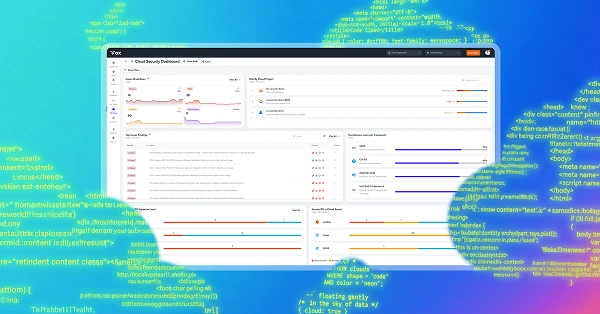
OX VibeSec is built natively around this operational model, providing the unified telemetry required to secure AI-authored software at scale. Rather than treating security as an isolated post-commit check, the platform unites governance, analysis, and runtime visibility on what OX calls a single context lake. This architecture allows security teams to enforce policy at the moment of generation while maintaining operational lineage from prompt to production.
| Discipline | Platform Execution | Security Outcome |
| Prompt-Layer Governance | Identifies and controls MCP connections, models, and AI users | Governs which coding tools and agents are permitted, with user-based permissions |
| Generation-Time Control | Injects organizational policy into the developer loop | Intercepts insecure code before it hits the repository |
| Provenance and Inventory | Correlates prompt context, code, dependencies, and cloud | Traces runtime vulnerabilities to the responsible prompt |
Shifting Security to the Point of Generation
Vibe Security is the essential operating model for an era where non-human agents write a growing share of production code. It is not a single product category or an incremental rebrand of legacy AppSec, but an organizational capability built on five core disciplines: prompt-layer governance, generation-time control, provenance tracking, verified exploitability evidence, and delivery-first velocity measurement.
The fundamental shift Vibe Security demands is moving the security decision from post-commit review to the exact moment of code generation. By governing agent permissions, injecting contextual policy into the developer loop, and maintaining full lineage from prompt to cloud, organizations can safely harness the full velocity of AI-driven engineering without sacrificing security posture.
To learn how your organization can operationalize AI-native security engineering and establish generation-time control across your development pipelines, schedule a demo with an OX Security expert.
FAQs
Vibe coding is a development practice where developers build software by describing desired application behavior in natural language to autonomous AI models rather than typing code manually. In this conversational loop, the developer acts as a high-level director, iterating on prompts until the model produces code that matches observed expectations. While it unlocks massive engineering velocity, it detaches the developer from structural code integrity and creates unique vulnerability profiles, including hallucinated dependencies, hardcoded secrets, and synthetic injection flaws.
Securing autonomous agent output requires moving governance directly to the point of generation rather than relying on post-commit scans or manual pull request reviews. Teams must enforce prompt-layer guardrails that restrict which Model Context Protocol (MCP) servers, packages, and environment permissions an agent can access. During execution, real-time security context must be injected directly into the agent’s context window to intercept insecure patterns before code hits the repository. Finally, organizations must maintain lineage graphs that track agent identity, prompt history, dependency choices, and exposed API endpoints for every generated artifact.
Vibe coding is safe for enterprise adoption only when surrounded by an AI-native security architecture. Without generation-time controls and agent permission boundaries, unguided vibe coding exposes enterprises to severe risks, including unverified open-source package ingestion, exposed API credentials, and unmanageable vulnerability backlogs. When enterprise teams pair natural language generation with real-time policy injection, automated reachability analysis, and continuous artifact provenance, they can capture high development velocity without compromising their overall security posture.